Dementia support in Gloucestershire: Help before diagnosis
Across Gloucestershire, many people affected by dementia are waiting too long for a diagnosis — and for the support that should come with it.
This year’s Dementia Action Week highlights a stark reality: 1 in 3 people with dementia do not have a formal diagnosis. For individuals and families, that can mean months — sometimes years — without clarity, information, or support.
Across Gloucestershire, Barnwood Trust funds organisations stepping into that gap. Their work shows that support does not need to wait for a diagnosis — and that connection, creativity and practical help can make a meaningful difference at every stage.
Support while waiting
Age UK Gloucestershire’s Dementia, Diagnosis and Memory Support project was created in direct response to long diagnostic waiting times and the risks that come with them. NHS data suggests an estimated 700–900 older people without children in the county may be living with undiagnosed dementia, leaving them at greater risk of isolation, delayed medical intervention and crisis-driven support.
“People are waiting a long time for an official diagnosis. During this waiting period they often miss out on support or information about their options,” explains Jane Shute, Head of Fundraising and Communications at Age UK Gloucestershire.
“We offer support to those awaiting a diagnosis and also those worried about their memory as well as their loved ones, so people feel less alone and more empowered at what can be a difficult time.”
Since October, the project has supported over 100 people, signposting what help is available through offering information, advice and emotional support to both individuals and the people around them.
“We were surprised by the number of carers we have supported. In fact, 68% of those supported have been loved ones.”
The service also plays a preventative role. “Through our service we have prevented crisis and escalation, including safeguarding risks,” Jane says.

Creativity, connection and equality
For several funded partners, creative and social activities offer a non-clinical, accessible route into support.
At the Gloucester Dementia Choir, singing brings people together in ways that go far beyond music. Set up in response to unmet demand for inclusive activities after COVID, the choir welcomes people with dementia alongside partners, carers and family members creating a shared space rather than a service for one or the other.
One of the most powerful impacts is how it changes relationships. Becky Chevis, Community Music Lead for Gloucestershire Academy of Music, reflects:
“We had a lovely quote from a couple who said choir is the only time in the week where they interact as equals because they’re both singing together.”
Sessions are shaped by members themselves, who choose songs that matter to them — from hymns and folk songs to pop and dance tracks. That shared ownership has led to performances and creative projects that build confidence and visibility.
At the heart of it, Becky says, is joy.
“When we come together and sing, we do have a really uplifting, joyful time and have a lot of fun together, as well as being honest about the things that are difficult.”

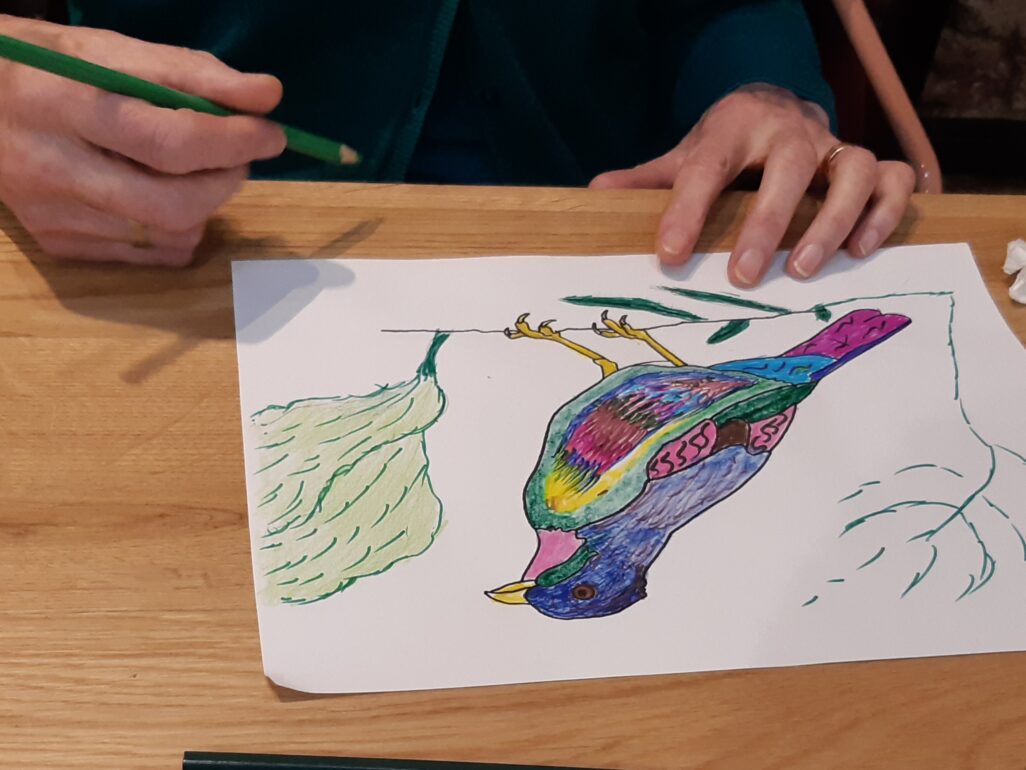
Create and Connect, delivered by Art Shape, brings people with dementia and their carers together in welcoming, accessible spaces to take part in creative activity at their own pace.
Kim Hill, Senior Project Manager at Art Shape, explains:
“It’s largely about offering something where a person with dementia and their carer can go along together and both parties can get something out of that experience.”
These shared experiences can strengthen relationships between carers and those they support. One participating couple described how working together on a single piece of artwork helps them feel like a team, creating something that neither could do without the other. As well as strengthening relationships, these sessions can offer carers a form of informal respite, giving them space to relax and take part and enjoy shared time without the usual pressures of caring.
Over time, routine and familiarity have helped reduce isolation and anxiety for people with dementia and carers alike. “People spoke about the value of having a routine and somewhere safe to go regularly — a place where they could get out of the house without distressing the person that they were caring for.”
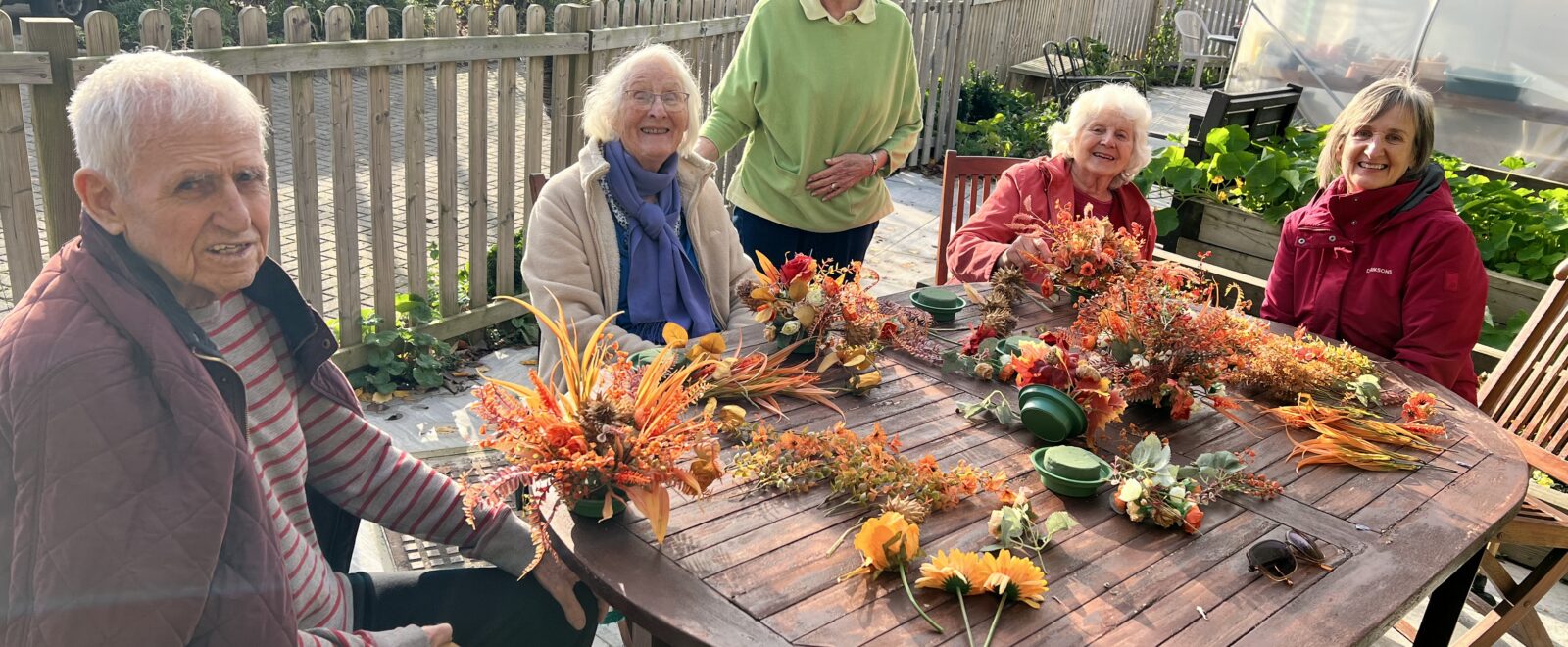
Alongside this, The Garden Pathway offers tailored horticultural therapy. Clare Tangye highlights emerging evidence from recent studies:
“What they found is that people who were part of a participatory horticulture therapy programme not only saw improvements [in] mental health… physical strength from using tools, but also their cognition, which is a really striking finding.”
Other funded partners focus on longer‑term support and practical respite for carers. Crossroads Care Gloucestershire observes that carers in their 60s and 70s, who were previously managing, are increasingly at breaking point, alongside a rise in earlier onset dementia. Their day‑club model offers longer periods of care at an affordable cost, providing vital respite for carers alongside social connection and meaningful activity.
Why this matters — especially now
Ongoing work from our funded partners shows that waiting for a diagnosis should not mean going without support. Community‑based projects are already meeting people where they are — offering connection, dignity and practical help at a time when uncertainty can feel overwhelming.
John Colquhoun, Chair of Trustees at Engaged Now CIO and a leading figure in the Stroud Dementia Action Alliance, points to the wider change still needed:
“People with dementia often withdraw and face exclusion from community life and activities. We wish to change the way they are often defined by their diagnosis.”
He adds:
“We would like to see those making and communicating diagnoses of dementia to people encouraging the exploration of community opportunities with their patients, as it is often these rather than services that are essential for quality of life.”
Key takeaways:
Across Gloucestershire, funded partners consistently highlight three things:
- People should not have to wait for a formal diagnosis to access support and information. Funded partners are helping fill gaps created by long NHS waiting times.
- Creative and community-based activities can reduce isolation and improve wellbeing for both people with dementia and carers.
- Respite opportunities and shared support spaces give carers time to recharge while helping reduce ongoing pressure and burnout.
Take action this week
If you or someone you care about is worried about memory loss, waiting for a diagnosis, or living with dementia, support is available now.
Organisations across Gloucestershire are offering information, advice, creative activities and welcoming spaces for people affected by dementia — including loved ones and carers.
Get practical advice, emotional support and signposting
Connect with others through music, art and community activities
- Gloucestershire Academy of Music Dementia Choir – podcast and Facebook group
- Art Shape’s Create and Connect programme
- The Garden Pathway horticulture therapy
- Cycling with Goals Beyond Grass – Dementia Adventures
- Guidepost’s CONNECT social groups
Find respite care and day club opportunities
Learn how to make your community more dementia‑friendly
- Dementia Action Alliances in Gloucestershire
- EngageD Now dementia-friendly hub in Stroud